Lychgate’s mastermind Vortigern discusses E. M. Forster, literature and the dystopian world of Precipice
“We created the Machine to do our will, but we cannot make it do our will now. It has robbed us of the sense of space and of the sense of touch; it has blurred every human relation and narrowed down love to a carnal act, it has paralyzed our bodies and our wills, and now it compels us to worship it.”
E. M. Forster, The Machine Stops
It is easy to think of artificial intelligence and social media as defining features of modern society. But envision being a writer – or, perhaps, a visionary? – at the beginning of the 20th century, long before all this technological madness, and imagining a civilisation living underground, entirely dependent on machines and increasingly detached from one another. Published in 1909, The Machine Stops by E. M. Forster is almost annoyingly prescient. For British avant-garde black metal band Lychgate, it provides the conceptual foundation for their latest album Precipice.
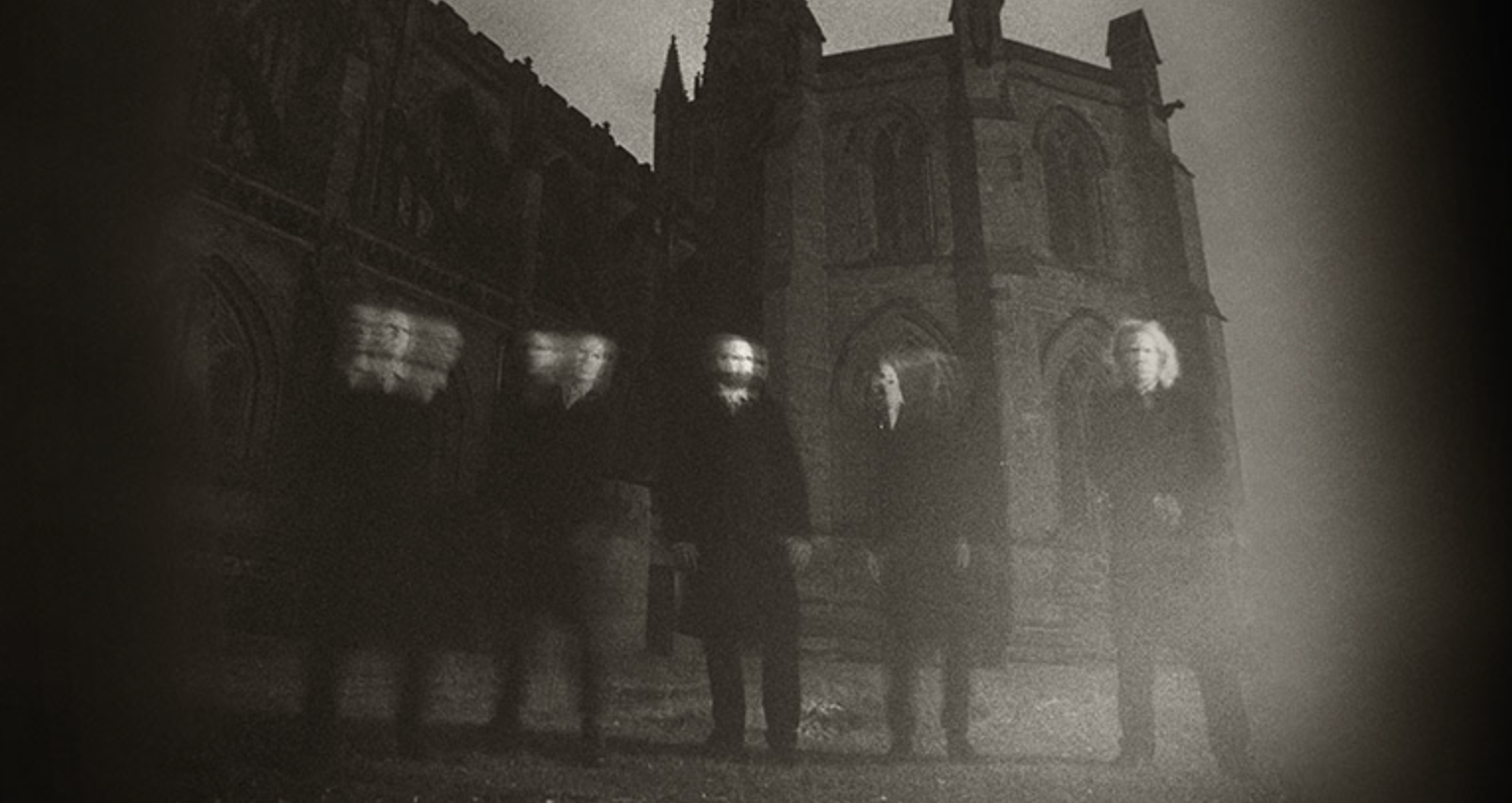
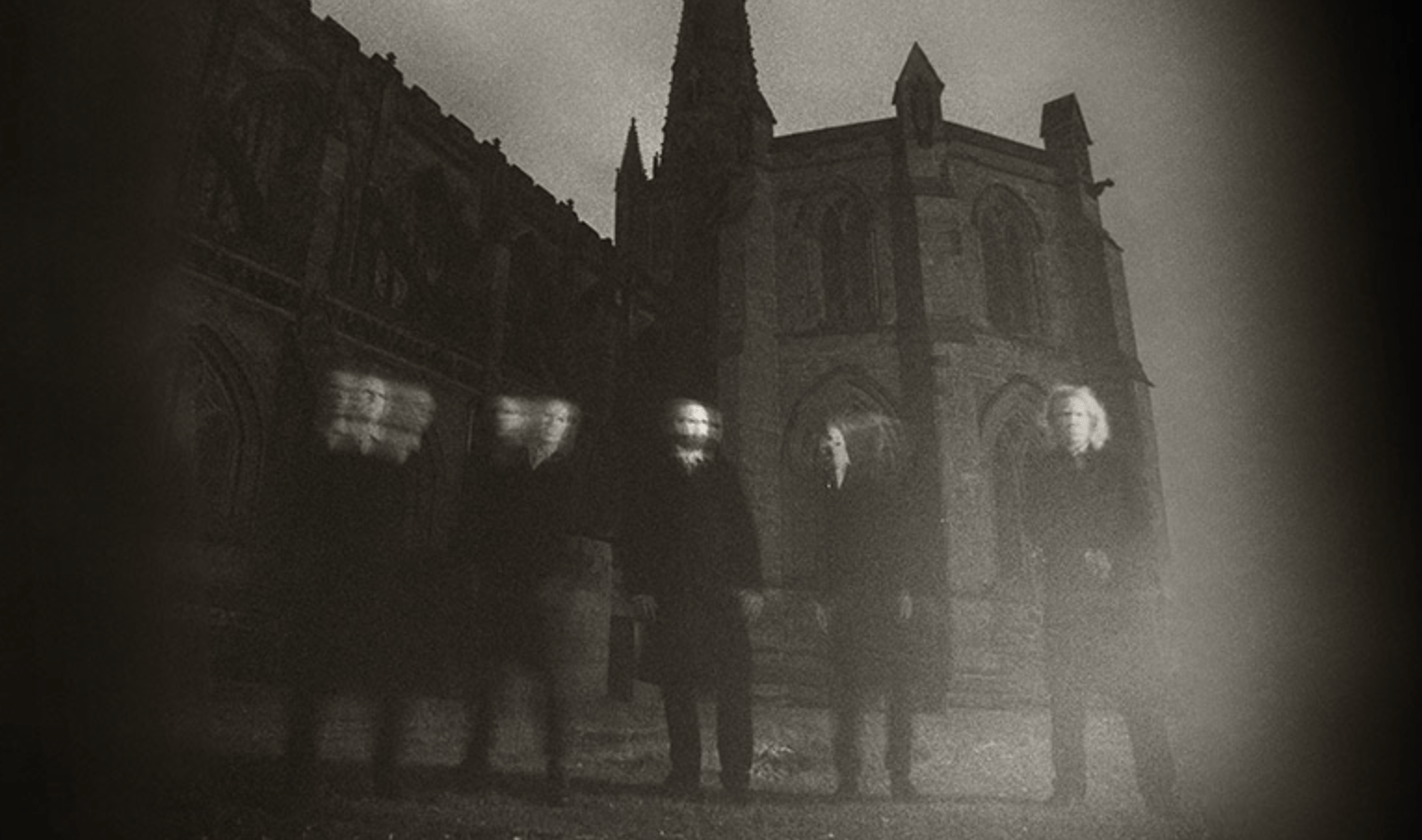
Vortigern, guitarist, lyricist and the band’s principal songwriter, found in Forster’s novella a natural continuation of ideas that have long shaped the work of Lychgate, the band he formed in 2012 in collaboration of Greg Chandler (vocals and guitars, also in Esoteric), Aran (bass) and T. J. F. Vallely (drums). In particular, its recurring fascination with control, detachment and the individual under pressure.
“I wanted the concept of Precipice to be a logical progression from previous themes – the Panopticon, surveillance, loss of the individual, crowd or ‘swarm’ psychology – without repeating ourselves,” he explains. “I also wanted the source to be from the early twentieth century.”
It is common, when talking to lyricists and authors, to hear that the underlying idea was the first step, the seed from which the composition grows. In Lychgate’s latest work, however, it was only halfway through the writing process that the concept emerged.
The literary connections extend well beyond Forster. Take the suffocating yet progressive song Mausoleum of Steel, for instance. Whilst it directly references the hexagonal cells in which humans live in The Machine Stops, the track also draws on the haunting Allegory of the Cave, by Plato, where prisoners mistake shadows for reality and, unaware, reject the possibility of another world. Elsewhere, we can spot hints at H. G. Wells’ A Story of the Days to Come, T. S. Eliot’s The Waste Land or Friedrich Nietzsche’s Thus Spoke Zarathustra.
Despite this literary density, music always takes priority. “For me, music is the language. I see that it takes a certain direction, and from that point I can speculate what lyrical content will be befitting. However, once the lyrical concept has been chosen, it does help guide the remaining composition process.”
And, since its inception, Lychgate have taken many directions without fear of evolving, even in the way they create. Their 2013 self-titled debut, for instance, was largely written on guitar, whilst later on, starting with 2015’s An Antidote for the Glass Pill, everything has been crafted primarily on piano, through transcription and programming. “I know this approach is very uncommon in the metal scene, but I find it liberating. One can do things one would never have otherwise thought of if using only a guitar.”

The result is a sound that draws as much from Rock in Opposition pioneers Art Zoyd, Univers Zero and Shub-Niggurath as it does from the later work of Emperor, constantly shifting between black metal, death metal, classical composition and avant-garde experimentation.
“There are elements of unpredictability, but that’s one of the features of the genre itself. Darkness or tension needs ambiguity, as does a good novel. For cohesiveness, I believe underlying musical patterns and harmony link the threads.”
And, day by day, it becomes harder not to feel the themes of The Machine Stops creeping ever closer to reality. “We are on the verge of it,” Vortigern says when asked whether we already inhabit a dystopian age. “It’s just that it’s a dystopia in a way different to what previous generations might have imagined.”
Visually, the album artwork also turns directly to the novella. It shows a skeletal serpent, bringing to mind the scene in which Kuno escapes to the Earth’s surface before a giant mechanical worm drags him back underground, while also evoking the ouroboros as “the eternal cycle of destruction and re-creation.” Likewise, the closing track, Pangaea, widens the album’s perspective beyond humanity itself, becoming, in Vortigern’s own words, “a loose reference to existence in the sense of colossal timescales.”
While literature provides Precipice with its conceptual framework, cinema is arguably just as important to Lychgate’s aesthetic, particularly in establishing its atmosphere. Works from filmmakers including Roman Polanski, Alfred Hitchcock, Jean-Luc Godard and Jean Cocteau provide an apparently endless source of inspiration (check out the music video for Hive of Parasites above to get an idea). But that, perhaps, is material for another article.
Precipice was released on December 19th via Debemur Morti Productions.

Leave a Reply